Is Harvard Public or Private? Here's the Actual Answer
Harvard is private, not public, and that one fact quietly shapes admissions, cost, and campus life more than people realize...
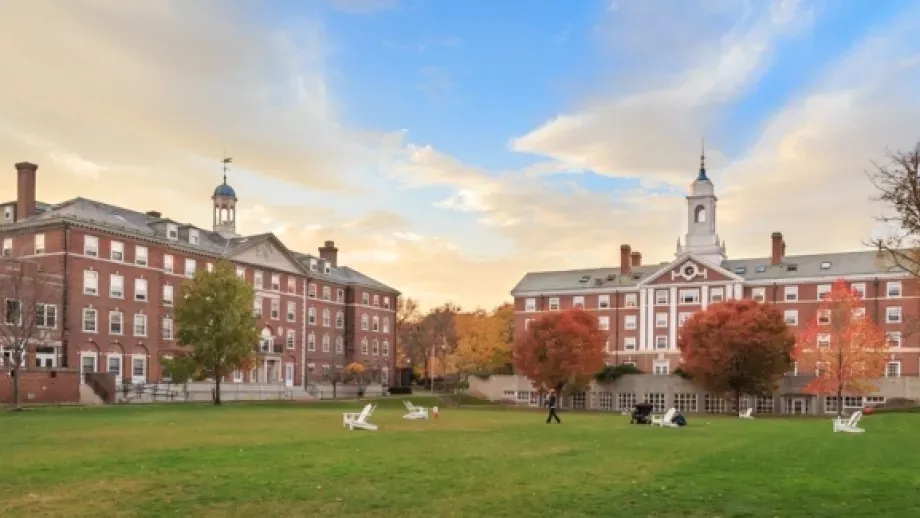
You'd think this would be a simple one to Google. It isn't, really, not because the answer is complicated, but because people keep muddying it with talk of government funding, research grants, and Harvard's sheer size. So let's clear it up properly: Harvard is a private university. Full stop. But why that matters, and what it actually changes for you as an applicant, is where things get interesting.
Public vs. Private, Quickly
Before we get into Harvard specifically, it's worth knowing what actually separates these two categories, because the label affects almost everything about your experience there.
Public universities are funded substantially by their state government. That's the whole point of them, they exist to educate residents of that state affordably, which is why you'll see such a massive gap between in-state and out-of-state tuition at places like the University of Michigan. They also tend to be bigger. Lecture halls with 400 people in them, sprawling campuses, dozens of majors you've never heard of.
Private universities don't get that state money. Instead, they run on tuition, donations, and, for the wealthier ones, investment returns from their endowment. No state funding also means no state oversight, which gives private schools a lot more freedom in how they set admissions policy, structure their curriculum, and run the place day to day. That independence is a big part of why private universities can afford smaller class sizes and a higher staff-to-student ratio. It's also, unsurprisingly, why they tend to cost more.
Neither model is inherently better. It genuinely depends on what you're after: affordability and scale, or intimacy and resources.
So Where Does Harvard Fit?
Squarely in the private category, and it's not close. Harvard gets no direct funding from the Massachusetts state government for its day-to-day operations. Every dollar comes from tuition, philanthropy, and its endowment, which is the largest of any university on the planet, sitting north of $56 billion as of the most recent fiscal year.
That endowment is doing a lot of heavy lifting. Harvard Management Company funds a sizeable chunk of the university's annual operating budget straight out of investment returns, which is part of why Harvard can offer the financial aid packages it does without blinking.
A common mix-up here: people assume that because Harvard receives federal research grants, which it absolutely does, especially for its science and medical departments, it must count as a public institution. It doesn't. Research funding and state operational funding are completely different things. A private university can pull in millions in federal grants and still be 100% private in terms of governance and structure. Harvard's a perfect example of that.
A Quick Word on Harvard's History
Harvard was founded in 1636, which makes it older than the United States itself by 140 years, a fact that still catches people off guard. It started as a small college training clergy for the Puritan colonies, originally going by the far less catchy name "New College," before being renamed after John Harvard, a young minister who left the school his library and half his estate when he died.
From there it grew into what it is now: a sprawling university system encompassing Harvard Law, Harvard Medical School, Harvard Business School, and a dozen other graduate faculties, alongside the undergraduate college most people picture when they hear the name.
Getting In: What Private Status Actually Means for Applicants
This is the part that matters most if you're actually applying somewhere, so let's get into it properly.
Public universities, especially state flagships, often reserve a set number of spots, sometimes a majority, for in-state residents. There's usually a more formulaic side to admissions too, weighing GPA and test scores fairly heavily because the volume of applicants makes a fully individualized review impractical.
Private universities like Harvard don't have that in-state obligation, and their admissions process reflects it. Harvard uses what's called holistic review, looking at your grades, yes, but also your essays, recommendations, extracurriculars, and the less quantifiable stuff, like whether you've actually done something interesting with the opportunities available to you. It's genuinely trying to build a specific kind of class, not just rank-order applicants by test score.
The trade-off is brutal selectivity. For the Class of 2029, Harvard admitted 2,003 students out of 47,893 applicants, an acceptance rate of roughly 4.2%. That's actually a touch higher than the previous couple of cycles, mostly because the applicant pool shrank slightly after standardized testing became mandatory again. Don't read too much into that "increase," though, this is still one of the two or three hardest schools on the planet to get into.
If you're weighing your options, the honest thing to say is: apply if you have a genuinely compelling application, but build a list that doesn't hinge on a 4% shot.
The Financial Aid Piece Nobody Should Skip
Here's the bit that surprises a lot of prospective applicants, especially international ones who assume "private and expensive" means "out of reach." For Harvard's most recent incoming class, nearly half the students paid nothing at all in tuition. Under Harvard's current aid policy, families earning $100,000 or less pay zero tuition, and that threshold extends to $200,000 for tuition specifically (room, board and other costs still apply on a sliding scale above the lowest income bands).
This isn't charity dressed up as marketing, it's a direct consequence of that endowment. Because Harvard isn't leaning on tuition revenue the way a smaller private school might have to, it can afford to run admissions need-blind and then meet full demonstrated financial need for whoever gets in. So the sticker price you see quoted everywhere is close to meaningless for a huge share of admitted students. International applicants get the same treatment, too, financial aid is awarded on exactly the same basis regardless of citizenship.
How Harvard Stacks Up Against the Rest of the Ivy League
Harvard is one of eight schools that make up the Ivy League, and every single one of them is private: Yale, Princeton, Columbia, Penn, Brown, Dartmouth, and Cornell round out the group. They share a broad family resemblance: heavy endowments, need-based aid, low acceptance rates, big research output.
But the differences matter more than people give them credit for. Princeton leans hard into undergraduate teaching and its residential college system. Columbia has that famous Core Curriculum and sits in the middle of Manhattan, which shapes student life in a completely different way than Harvard's more traditional New England campus. Cornell, notably, actually has a few statutory colleges that receive New York state funding, making it a strange partial exception to the "all private" Ivy rule, though its core identity is still private.
If you're choosing between Ivies, "which one is more prestigious" is the wrong question. "Which one actually fits how I want to learn" is the right one.
What Studying at Harvard Actually Looks Like
Academically, Harvard offers an enormous range: thousands of courses spread across dozens of departments, with genuine flexibility to build an interdisciplinary path if that's what you're into. The faculty roster reads like a who's who of whatever field you're looking at, and the research infrastructure (labs, institutes, funding) is about as good as it gets anywhere in the world.
Campus life runs through the residential house system. First years all live together in Harvard Yard, then get sorted into one of twelve upperclassman houses for the rest of their time there, each with its own quirks, traditions, and built in community. It's a deliberate structure designed to stop a school this large from feeling impersonal, and by most accounts it works reasonably well.
The Bottom Line
Harvard is private, no ambiguity, no asterisk. What that actually means in practice: independence from state funding and oversight, an admissions process built around holistic review rather than formula, brutal selectivity, and a level of financial aid generosity that most people wildly underestimate.
If you're building a college list and Harvard's on it, apply for the education and the opportunity, not the name, and make sure the rest of your list doesn't assume you'll be one of the 4%.